Defensible AI for clinical decisions

Show your working.

Every AI gives you an answer; CREAM™ shows whether you can defend it.

We make the uncertainty visible. We allow the evidence to decide how much survives.

Email us for a scoping call Watch the video
The problem

Clinical reasoning has never been captured in a form that anyone can audit.

Doctors lose sleep over having to explain their thought process in court or to a regulator, about a case that may have happened years earlier.

78%

of hospital leaders surveyed were not highly confident they could produce a complete AI audit trail for regulators or payers within 30 days.

Black Book Research survey of 182 US hospital leaders, 15 October to 8 November 2025: 22% reported high confidence; 78% is the remainder. Black Book release.

What would make the use of AI in medicine defensible from a medicolegal point of view?

The signal

Clinicians are already asking AI what to do with their patients.

703,265

US clinicians a month were using one AI platform, OpenEvidence, by June 2026. In January 2024 it was 355.

51.9%

of about 270 million questions were about clinical decisions, particularly treatment and management.

13.9%

were about diagnosis.

JAMA, 15 October 2026, reported by Harvard Medical School. About 950,000 US physicians, physician assistants and nurse practitioners on one platform. The study measured use, not outcomes. It was NIH-funded; OpenEvidence supplied the de-identified data, and three co-authors work for it.

About

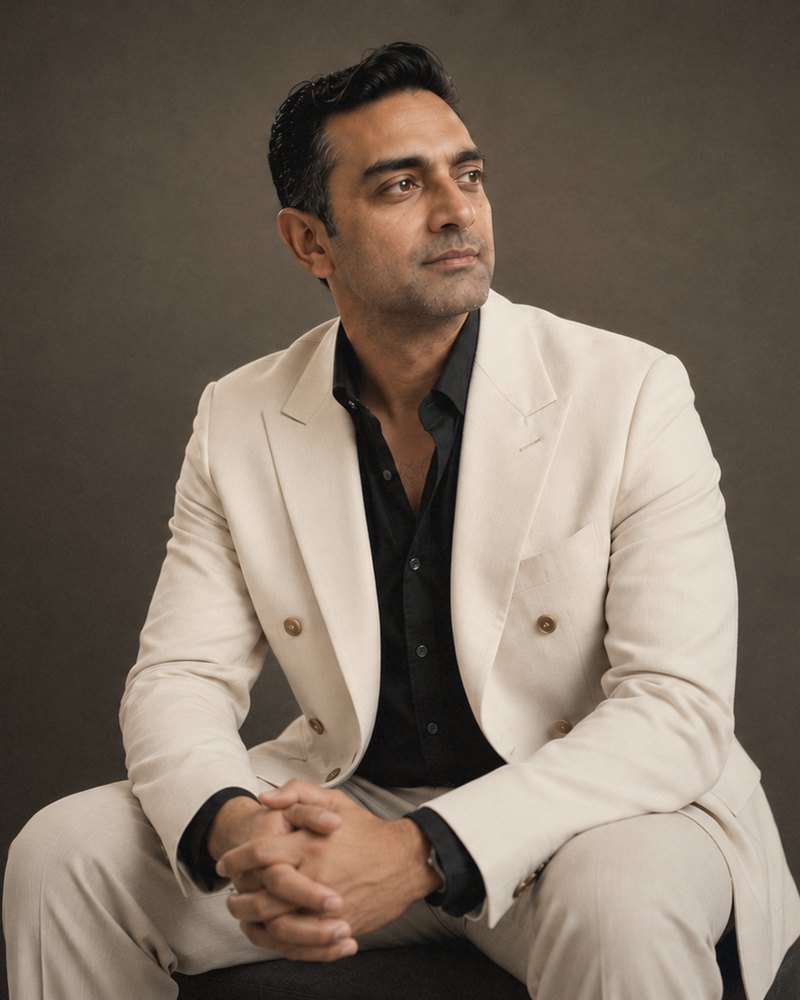
Dr Nishant Joshi, MD

The creator of CREAM™.

Dr Nishant Joshi, MD

Dr Nishant Joshi, MD, is a qualified GP living between London and Gibraltar. He has worked with the World Health Organisation and United Nations as a communications expert.

He used his machine learning tool to track COVID-19 through early 2020. That gave him the context he needed to work with frontier AI models. It also led to Dr Joshi becoming the first frontline NHS doctor to publicly raise the alarm on COVID-19. He then campaigned for protective equipment for NHS staff, brought a High Court challenge over PPE guidance, and was named one of the FA's England Lionhearts.

Dr Joshi previously worked in high-performance environments with elite sportsmen. He has climbed Mt Kilimanjaro as an expedition doctor, breaking a world record in the process. From a multi-disciplined base, he has been fascinated by the art of decision-making, and delivers workshops in optimal decision-making to both private and public sectors.

In 2026, he won the Kinetic Award at Gibraltar's Excellence and Innovation Awards for his proposal for an AI repeat-prescriptions system. He is passionate about patient safety, AI governance, and evidence-based longevity.

He designed CREAM™ as an AI decision-making framework that would be medicolegally defensible. It aims to mitigate the risk for doctors, insurers and medical institutions.
Why now

As the models get better, the value moves from the answer to the defensibility of the answer.

Frontier AI models are now so capable that the value of a slightly better answer is shrinking, while the danger of a confidently wrong one is growing. A more fluent model produces more convincing mistakes.

And the rules and the market are arriving at the same time.

2028

EU AI Act high-risk obligations reach AI in regulated products, including medical devices, from 2 August 2028.

Regulation (EU) 2026/1744, in force 27 July 2026.

£18.8bn

UK AI assurance market by 2035, in gross value added, up from £1.01bn in 2024, if barriers to AI adoption are addressed.

DSIT, Trusted third-party AI assurance roadmap, 3 September 2025. The category, not our share of it.

What CREAM™ is

CREAM™ records the reasoning behind a clinical decision, and governs the AI that helps.

Every AI gives you an answer; CREAM™ shows whether you can defend it. It records what was checked, what is still open, and what the evidence permits you to conclude.

A new AI framework that turns clinical judgement into a traceable line of reasoning.

It does not sell the intelligence. It sells what makes the intelligence accountable: the source check, the audit trail and the reasoning record a clinician needs to defend a decision.

In use

How CREAM™ is used

Here is what that looks like in practice, in four storyboards.

Each is hypothetical and simplified. Jump to: Clinical AI output audit · Insurers and indemnifiers · Doctors and clinics · Teams building clinical AI

Swipe each storyboard to see the next frame

Storyboard 1 · Clinical AI output audit

A house survey, for AI answers

1

A hospital is about to buy a symptom-checker chatbot.

2

It asks the vendor one question: which of its answers can be trusted?

3

The vendor sends a sample of de-identified answers for a CREAM™ audit. A clinician traces every clinical statement to its source, or marks it unsupported.

4

Like a good survey, the report says what was inspected, what could not be reached, and what needs a specialist's eye.

5 · Your scene

To see if CREAM™ is right for your organisation, please email us for a scoping call.

Email us
Storyboard 2 · Insurers and indemnifiers

A flight recorder for decisions made with AI

1

A doctor uses an AI tool during a consultation.

2

Three years later, a complaint arrives. She cannot recall what the tool said, or what she checked.

3

With CREAM™ she does not need to. The reasoning was recorded as it happened.

4

The indemnifier sees the sources opened, the checks that ran, what stayed open, and who signed. How the decision was reached, not a reconstruction.

5 · Your scene

To see if CREAM™ is right for your organisation, please email us for a scoping call.

Email us
Storyboard 3 · Doctors and clinics

A checklist you can't tick without showing your working

1

A private clinic sends each patient a written report, with a page of recommendations from blood results to supplements.

2

Before it goes out, CREAM™ checks each recommendation: the source behind it, how strong that evidence is, and what was assumed.

3

The doctor sees what each recommendation stands on, and which are still a judgement call.

4

The doctor signs a report that shows its working.

5 · Your scene

To see if CREAM™ is right for your organisation, please email us for a scoping call.

Email us
Storyboard 4 · Teams building clinical AI

Good brakes let you drive faster

1

A product team wants to add medical answers to its app.

2

Its lawyers keep asking what happens when the model is confidently wrong.

3

CREAM™ sits between the model and the user, on the model the team already uses, with no retraining.

4

Every answer arrives with its record, so the team can show customers how each one was reached.

5 · Your scene

To see if CREAM™ is right for your organisation, please email us for a scoping call.

Email us

Researchers. CREAM™ is also a framework for studying and measuring clinical reasoning.

Worked example

One decision, worked through

An illustration of how it works: a hypothetical case, simplified.

An older adult taking amlodipine, a common blood-pressure medicine, has new ankle swelling. Asked for a plan, a fluent model answers in one confident line.

1 · Without CREAM™: the fluent answer

“Start a diuretic to clear the fluid.”

Quick, plausible and confident. It treats the swelling as a new problem, and adds a second drug.

2 · With CREAM™: the question opens

Before anything is ruled out, every plausible explanation is put on the table.

The heart The veins The kidneys The liver The medicine itself
3 · The record
Retrieved

“Ankle swelling is a known side effect of amlodipine.” The product information was opened for this case and is named in the record. It lists ankle swelling as a common side effect.

Computed

“The swelling began after amlodipine was started.” Inferred from the dates supplied, with the reasoning shown.

Assumed

“The heart is fine.” Nothing in the record supports it. The claim is struck and rewritten: heart failure not yet excluded.

Finding. The heart failure check could not run: it needs an examination and an NT‑proBNP blood test, and neither is in the record. So it is recorded as a finding, not a pass.

4 · The evidence decides

The evidence points first to the medicine already being taken. The plan changes: review the amlodipine instead of adding a second drug to treat its side effect, and test for heart failure, which stays visibly open until the result is back. The doctor sees all of it, decides, and signs.

5 · Years later

The record answers.

If anyone asks why a diuretic was not started, the doctor does not have to remember. The record shows what was known, what was checked, what was assumed, what stayed open, and who decided.

What CREAM™ added

Without CREAM™
With CREAM™
One explanation
Five explanations, including the medicine itself
No source
The product information opened and named
No timeline
The swelling tied to when the drug was started
“The heart is fine”, taken on trust
Struck and rewritten: heart failure not yet excluded
A check that never ran, invisible
Recorded as a finding, before anyone signs
A second drug to treat a side effect
The first drug reviewed, and the heart tested
Nothing to show later
A dated, signed record of the reasoning

Sources opened for this example: amlodipine product information (SmPC, revised July 2022); NICE guideline NG106, chronic heart failure in adults; Savage and colleagues, JAMA Internal Medicine, 2020, on the calcium channel blocker and diuretic prescribing cascade.

To see if CREAM™ is right for your organisation, please email us for a scoping call.

Email us for a scoping call
The methodology

Rapidly maximise uncertainty. Then compress it.

Most AI races to sound certain. CREAM™ starts the other way: it rapidly maximises uncertainty in the reasoning, not in the testing, opening the explanations that matter, including the ones a fluent answer skips, before anything is ruled out. Then CREAM™ lets the evidence, not the model's confidence, decide how much survives. What the evidence cannot settle stays visibly open.

So the record shows what was considered, and why it was ruled out.

The core idea

Reasoning as entropy reduction.

Ask a model the same clinical question many times. The answers vary, and so does the reasoning: which explanations it weighs, which sources it opens, what it leaves out. The dangerous misses live in that spread.

Without CREAM™

The critical consideration surfaces on some runs and is missed on others.

With CREAM™

Designed to surface it on every run: the same checks, the same sources, the same omissions caught.

The same checks every time. Honest about what's still uncertain.

Illustration, not data. Consistency is not correctness: a system can be reliably wrong, which is why the record and the clinician stay in the loop. The spread can be measured on a single case by running it many times; that is our next study.

Explore the model Password protected. Shared under a non-disclosure agreement.
The CREAM™ ledger, up close

Bookkeeping, for reasoning

Bookkeeping never made a merchant honest. It made every error visible and traceable. The CREAM™ ledger does the same for an AI's reasoning. The ledger is a small part of what CREAM™ does. Our methodology is proprietary.

Where each claim came from

RetrievedFound in a source opened for this answer, and named.
ComputedArithmetic or inference on retrieved inputs.
AssumedNeither. Rewritten as a plain estimate, or removed.

Second-hand information, from a colleague, a letter or the patient, is recorded as theirs, not as verified fact.

What each check did

Clean. Ran, found nothing, and cites the evidence that it ran.
Finding. Ran and found something, or could not run, and says why. Never empty.
Not applicable. Does not apply here, and the reason is given.
Missed. Should have run and did not. Logged openly as a failure.
Principles

Honest by construction

An adjunct, not an author

CREAM™ does not diagnose, triage or prescribe as a directive. The clinician makes the decision and signs it. CREAM™ never does.

Sources before reasoning

Reasoning starts only after the original sources have been opened. A citation remembered but not opened is treated as an assumption.

Gaps are always shown

A check that could not run says so. The absence of a flag is never presented as the absence of a problem.

Dated and attributable

Every output is dated from the system clock, not from memory, and a named human signs it.

Patient data where it is lawful

Identifiable patient data stays only on systems legally allowed to hold it. Patient details are left out when the record is written, not deleted later.

The standard we hold it to

No unflagged errors where the truth is written down, and visible uncertainty everywhere else, kept that way by the checks, the clinician's audit and the failure log.

Checks scale with the stakes, so the record serves the patient, not the paperwork.

Evidence

Benchmarks measure answers, not reasoning.

In our own tests on HealthBench Hard, a demanding medical benchmark from OpenAI, CREAM™ improved the scores.

Clinical reasoning is not yet measured reliably at scale. Most benchmark scores say whether the answer matched, not whether the reasoning would survive scrutiny.

We are working with leading measurement scientists to rectify this, with papers in preparation.

Why it's hard to copy.

Anyone can tell a model to keep an open mind. Knowing where to open it, what to check, and what each check must prove before it passes is the hard part.

The CREAM™ methodology was built from logged reasoning failures, each traced to the check that should have caught it. Every new failure sharpens it.

It works on top of today's leading AI models, unchanged and without retraining, so each new AI model makes CREAM™ more useful, not less.

Better models do not replace the methodology. They raise its value: the more fluent the model, the more convincing the mistakes it must catch.

Beyond the clinic

Clinical today. Built to travel.

The CREAM™ methodology is domain-free by design: the source of every claim, a visible state on every check, dating, whose facts are whose, a named signature and a learning loop. What changes from field to field is each field's own sources, warning signs and time horizons. Built to be medicolegally defensible, CREAM™ fits any field where decisions must be defended, audited and trusted.

CREAMTM
Rethink The Way You Think.

Every AI gives you an answer; CREAM™ shows whether you can defend it.

To see if CREAM™ is right for your organisation, please email us for a scoping call.

Email us for a scoping call

joshi@askcream.com

Pilot partners welcome among clinical AI vendors, consumer health platforms, healthcare providers and indemnifiers.